
Industry Spotlight: Alternative Financing for Site Preparation Contractors
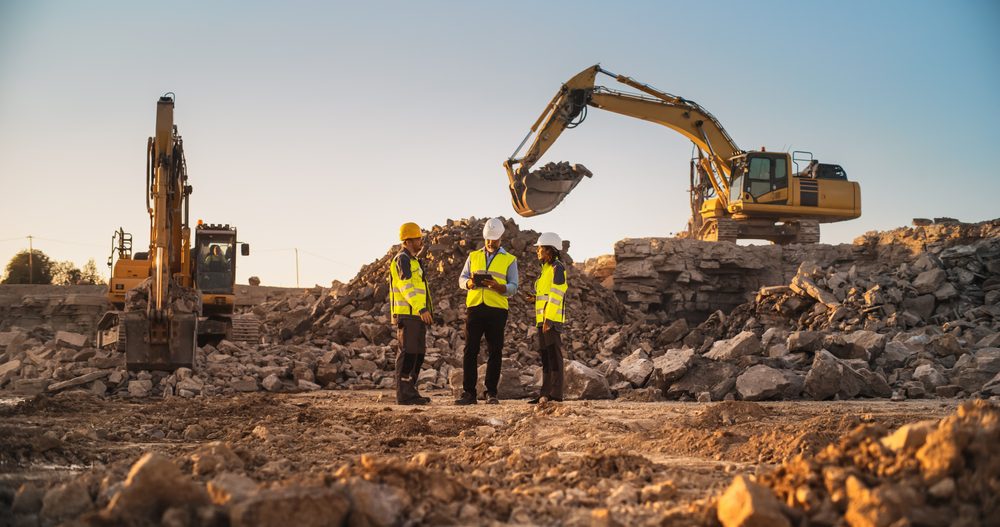
Site preparation contractors are among the first crews on any commercial, residential, or infrastructure project, and sometimes among the last to get paid. They clear the land, grade the soil, manage drainage, and set the conditions that every other trade depends on. The work is capital-intensive from day one, the equipment is expensive to own and run, and payment comes through the same slow construction billing cycle that burdens every subcontractor in the industry.
For a site prep contractor trying to grow, take on larger projects, or hold its operation together through a slow stretch, the gap between what the business earns and when it collects that money is the central financial challenge. Alternative financing products built around receivables and equipment address that gap in ways that conventional bank credit cannot.
The Cash Flow Structure of Site Prep Work
Site preparation work is project-based and front-loaded with cost. When a contractor mobilizes to a new site, fuel starts burning, operators start getting paid, and equipment starts depreciating from the first hour of operation. The work may run for weeks or months before the contractor submits its first application for payment, and that application enters the general contractor’s billing cycle before a check is cut.
Construction payment terms in the subcontractor market run from 30 days on the favorable end to 90 days or longer on projects with slower billing practices or public funding cycles. A site prep contractor working on two or three projects at once can carry a significant amount of completed, invoiced work at any given time while the cash account reflects the costs of the work rather than its value.
Why Conventional Credit Creates Friction
A revolving line of credit is the financing tool most site prep contractors pursue first, and for companies with years of operating history, strong balance sheets, and established banking relationships, it can work. The limitations surface for contractors that are growing fast, are newer to the market, or are trying to fund a project larger than their borrowing base can support.
Borrowing base formulas tied to receivables or equipment value can lag the pace of a growing operation. A contractor with $600,000 in submitted invoices for payment and another $400,000 in work nearing completion may find its credit line sized for a version of the business that existed a year ago. The bank’s underwriting has not caught up to the contract book.
Accounts Receivable Financing for Site Prep Contractors
AR financing converts submitted, approved invoices into working capital without waiting on the general contractor’s payment schedule. For a site prep contractor, this means an invoice for payment submitted at the end of a billing period can become cash within days rather than weeks or months.
The approval decision in AR financing rests on the creditworthiness of the account debtor, the general contractor or project owner on the other side of the invoice, rather than the site prep contractor’s own financial history. A subcontractor working for a regional or national general contractor with an established track record of paying its subs is working with an account debtor that a financing company can evaluate with confidence.
 This matters for site prep contractors that are growing, are newer in business, or have the financial profile of an asset-heavy operation with modest retained earnings. The strength of the counterparty on the invoice anchors the transaction, and many of the GCs awarding site prep work are creditworthy counterparties.
Equipment Financing and Sale-Leaseback
Heavy equipment is the largest capital commitment a site prep contractor makes, and managing that commitment without draining the operating account is a challenge every growing contractor faces. Excavators, dozers, motor graders, scrapers, and dump trucks represent significant capital, and that capital needs to earn its keep on active projects rather than sitting idle between contracts.
For contractors that own their equipment, a sale-leaseback converts that equipment equity into working capital while retaining full use of the machines. A site prep operation with $800,000 in owned equipment deployed on active projects can unlock a portion of that value through a sale-leaseback and put the capital to work on the next phase of growth, with the equipment staying on the job and the cash moving into the operating account.
Sale-leaseback is worth considering for contractors facing a capital need in a market where conventional credit is constrained or where drawing down an existing credit line would leave insufficient room for normal operating needs.
Purchase Order and Mobilization Financing
Site prep contractors face a mobilization cost that precedes any invoice. Moving equipment to a site, setting up temporary facilities, and beginning earthwork all require cash before the first billing period closes. For a contractor that has won a significant contract but has not yet invoiced against it, the period between contract award and first payment submission can be a cash-intensive stretch. 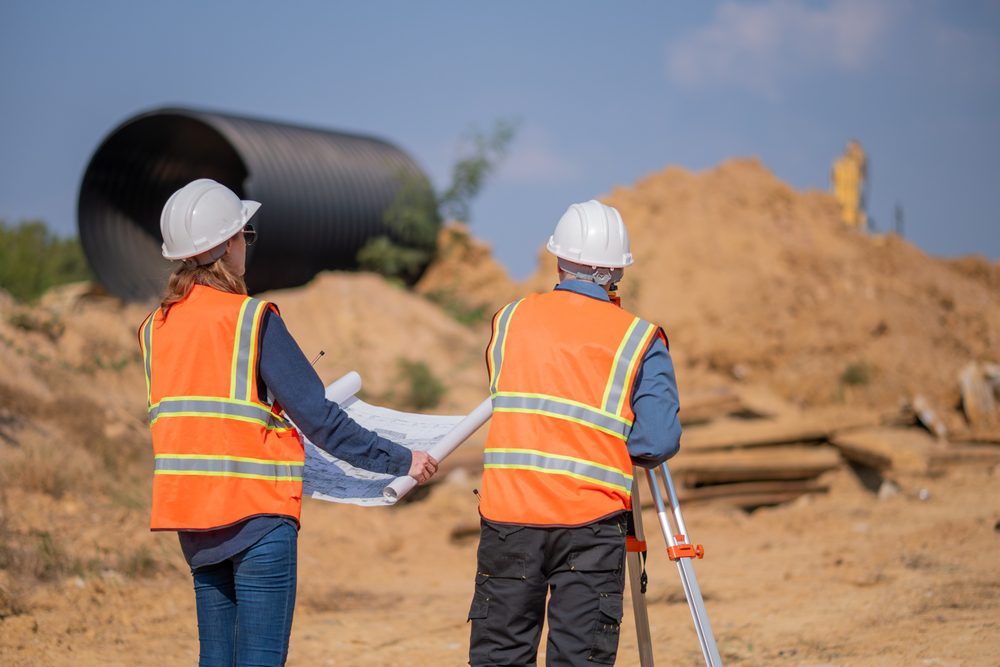
Purchase order or contract-based financing advances working capital against a signed contract or subcontract agreement, bridging the gap between mobilization and first invoice. The financing is grounded in the contract terms and the creditworthiness of the awarding GC or owner, and it resolves when the contractor’s invoices begin flowing and converting to AR financing.
Matching the Tool to the Stage
The most resilient site prep contractors manage their capital across multiple tools, matching each financing product to the specific need it fits. AR financing handles the gap between billing and collection. Equipment financing preserves liquidity during acquisition. Sale-leaseback converts idle equity into active capital. Contract financing covers mobilization costs before invoicing begins.
No single product covers every cash need across a project cycle, and relying on one product, a credit line in most cases, to absorb every cash flow event leaves the business with less flexibility than a diversified capital structure provides.
Latest Blogs
-

Can I Get Alternative Business Funding With Bad Credit?
A low credit score closes some doors. It does not close all of them. If you’ve been turned down for a business loan because of your credit score, you’re not alone, and you’re not out of options. According to the Federal Reserve’s 2024 Small Business Credit Survey, 29 percent of business loan applicants were denied…
-

Industry Spotlight: Alternative Financing for Telecommunications Contractors
Telecommunications contractors build and maintain the infrastructure that carries voice, data, and broadband across commercial buildings, residential developments, and public networks. Tower erection, fiber optic installation, underground conduit work, distributed antenna systems, and last-mile broadband deployment all move through contractors who mobilize crews, procure materials, and begin work weeks or months before the billing cycle…
-

Industry Spotlight: Alternative Financing for Truck and Auto Parts Distributors
Truck and auto parts distributors supply the components that keep commercial fleets, repair shops, dealerships, and municipal vehicle operations on the road. OEM and aftermarket parts move from manufacturers through distributors to fleet operators, trucking companies, commercial repair facilities, and government vehicle maintenance operations, and those buyers expect fast delivery and reliable inventory availability. The…
-
Industry Spotlight: Alternative Financing for Electrical Equipment Distributors
Electrical equipment distributors supply the components that keep construction projects moving and industrial facilities running. Switchgear, transformers, breakers, panels, wiring, conduit, motors, and lighting products move from manufacturers through distributors to electrical contractors, construction companies, industrial plants, utilities, and municipalities. The distributor sits in the middle of that supply chain, purchasing inventory from manufacturers on…