
Accounts Receivable Basics for Non-Accountants: What Every SMB Owner Needs to Know
If you’ve ever sent an invoice and then waited around for someone to pay it, you already understand accounts receivable in practice. This guide breaks down everything a non-accountant business owner or manager needs to know about AR, how it works, where it lives on your financial statements, and how to manage it well. We’ll also look at how it can be used as a financing tool when you need working capital.
What Are Assets and Liabilities?
Before getting into accounts receivable specifically, it helps to understand the two basic categories that define a business’s financial position.
Assets are everything your business owns or is owed that has monetary value. Cash in your bank account is an asset. Equipment is an asset. Inventory is an asset. As is the money that customers owe you for work you’ve already done.
Liabilities are everything your business owes to someone else. Unpaid supplier invoices are liabilities. Business loans are liabilities. Rent due next month is a liability.
The difference between your total assets and your total liabilities tells you your business’s net worth, sometimes called equity or owner’s equity. A business with more assets than liabilities is in a healthy financial position. One where liabilities outpace assets is in trouble.
Understanding this distinction matters because it shapes how every financial transaction gets recorded, and it explains why accounts receivable is treated the way it is.
What Is Accounts Receivable?

Accounts receivable (AR) is money that customers owe your business for goods or services they’ve already received but haven’t yet paid for. The moment you deliver a product or complete a service and send an invoice, that amount becomes accounts receivable. It is real money your business has earned. You just haven’t collected it yet.
Here’s a simple example. A staffing agency places five nurses at a hospital for a week and invoices the hospital $25,000. The work is done. The invoice is sent. But the hospital pays on net-60 terms, meaning payment won’t arrive for two months. For those two months, that $25,000 sits in the agency’s accounts receivable. It’s not cash yet, but it is a legitimate asset.
Accounts Receivable vs. Accounts Payable
These two terms are mirror images of each other, and understanding both is important for understanding your full financial picture.
Accounts receivable is money others owe you. It represents revenue you’ve earned that hasn’t been paid yet. It is an asset.
Accounts payable is money you owe others. It represents bills you’ve received from suppliers or vendors that you haven’t paid yet. It is a liability.
When a seller ships goods to a buyer, the amount owed sits on the seller’s balance sheet as an account receivable. On the flip side, it sits on the buyer’s balance sheet as both an inventory asset and a liability called an account payable.
The same transaction creates AR for the seller and AP for the buyer. One company’s receivable is another company’s payable.
What Is the Difference Between Trade Receivables and Accounts Receivable?
These two terms are often used interchangeably, and for most small businesses, they refer to the same thing.

A trade receivable is the most common name for an account receivable and is created through day-to-day business and normal sales transactions. When you sell your product to a retailer or provide a service to a client and invoice them for it, the resulting amount owed is a trade receivable.
Accounts receivable is the broader category. It includes trade receivables but also covers other money owed to your business that doesn’t come from a standard sales transaction. Tax refunds your business is owed, employee advances, or deposits due from a lease agreement are all accounts receivable but would not be classified as trade receivables.
For most SMBs, virtually all accounts receivable are trade receivables. The distinction becomes more relevant for larger companies with complex financial structures or for businesses that need to report their financials in detail for investors or lenders.
How Accounts Receivable Works on a Balance Sheet
The balance sheet is a snapshot of your business’s financial health at a specific point in time. It lists your assets, your liabilities, and the resulting equity. The balance sheet is divided into three main sections: assets, liabilities, and shareholders’ equity. Assets represent the resources owned by the company, while liabilities represent financial obligations to creditors.

Within the assets section, items are typically organized by how quickly they can be converted into cash. Assets expected to convert within a year are called current assets. Accounts receivable are classified as current assets on the balance sheet because they are expected to be converted into cash within a year.
On a typical balance sheet, current assets are listed in roughly this order: cash first, then AR, then inventory, then prepaid expenses. AR sits near the top because it represents money that should arrive soon.
As invoices are issued, the AR balance on your balance sheet rises. As customers pay, it falls. A high and growing AR balance can signal cash flow problems if customers are paying late or not at all, even if revenue appears strong on paper. This is one of the reasons AR management matters so much. A business can be profitable on paper and still run out of cash.
Tips for Getting Paid on Time
Managing AR well is one of the highest-leverage things a small business can do for its cash flow. Here are practical steps that work.
Invoice immediately. Invoices should go out no later than upon delivery. Batching invoices and sending them at the end of the week or month only adds more time before customers can start the payment process.
Set clear terms from the start. Before any work begins, spell out payment terms in writing, including the due date, accepted payment methods, and any late fees. Having everything in writing removes ambiguity and gives you something to reference if a payment becomes overdue.
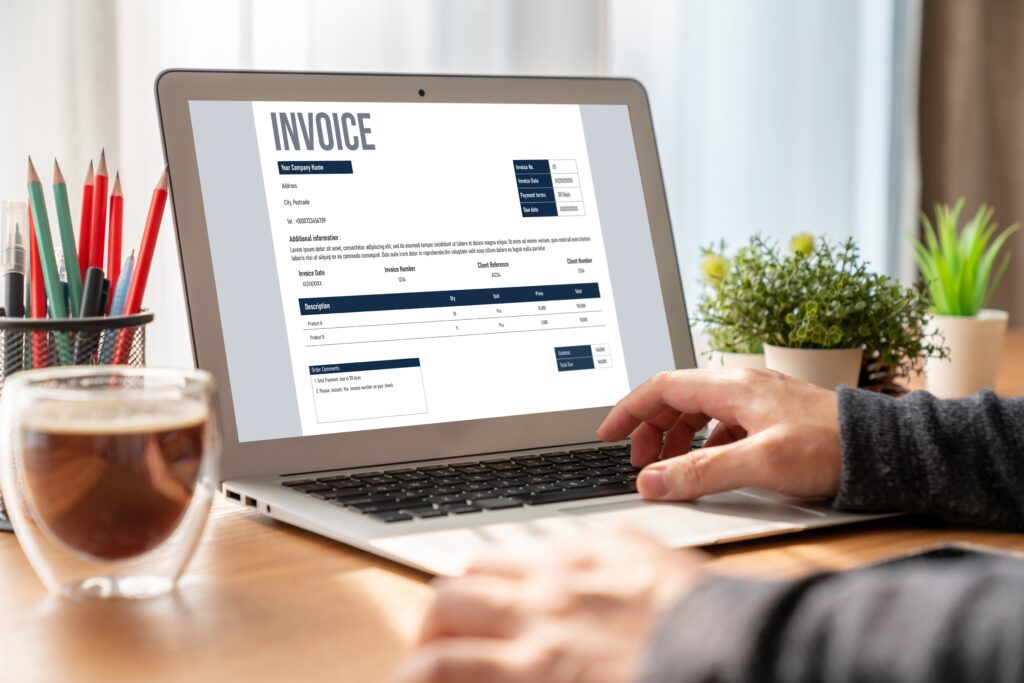
Make payment easy. Modernizing your accounts receivable collection system can drive top-line revenue by expanding your market share. For example, accepting only checks can exclude customers who have never owned a checkbook.
Follow up consistently. A defined follow-up schedule matters more than most business owners realize. Send a reminder a few days before the due date, another on the day it’s due, and begin escalating if payment doesn’t arrive. One of the important steps to ensuring on-time payment is making sure all parties are on the same page regarding payment deadlines, amounts owed, and payment methods.
Consider early payment incentives. Offering a small discount, for instance, 2/10 net 30, meaning a 2% discount if paid within 10 days versus the standard 30-day term. This can motivate faster payment from clients who have the cash available.
Run an AR aging report monthly. An aging report sorts your outstanding invoices by how long they’ve been unpaid. The most common divisions are 0 to 30 days, 31 to 60 days, 61 to 90 days, and over 90 days. Using an AR aging report to organize receivables by how long invoices have been unpaid quickly shows which customers might need follow-ups.
Check credit before extending it. For new clients, especially on large contracts, it’s worth running a basic credit check. Thorough customer onboarding helps prevent payment issues before they happen.
When AR becomes a Financing Tool

Even well-managed receivables create a waiting period between delivering work and getting paid. For businesses that invoice other businesses, payment terms of up to three months are common. That gap creates a cash flow challenge that has nothing to do with poor management, it’s built into the structure of B2B commerce.
AR financing addresses this directly. Rather than waiting for clients to pay on their own schedule, a business can establish a revolving credit line secured by its outstanding invoices. When capital is needed for payroll, inventory, or operations, funds are drawn against that credit line. As clients pay their invoices, the drawn amount is repaid and the credit line replenishes.
The key distinction between AR financing and selling your invoices through factoring is ownership. In AR financing, the business retains its receivables and continues managing its own collections. Clients are not notified. The lender simply holds the receivables as collateral, similar to how a bank holds real estate as collateral on a mortgage.
For businesses with consistent B2B invoicing, AR financing converts a waiting game into a working tool. Instead of your receivables sitting on the balance sheet as a promise of future cash, they become accessible capital today.
Take Control of Your Accounting
Accounts receivable isn’t just an accounting entry. It represents real revenue your business has earned, and how you manage it has a direct impact on your ability to pay bills, make payroll, take on new work, and grow. Understanding where AR fits on your balance sheet, staying on top of collections, and knowing how to leverage it as a financing tool are all practical skills that pay dividends whether your business is just getting started or already scaling.
You don’t need an accounting degree to manage AR well. You need a consistent process, clear communication with your clients, and a clear-eyed view of what your receivables are really worth.
Latest Blogs
-

Can I Get Alternative Business Funding With Bad Credit?
A low credit score closes some doors. It does not close all of them. If you’ve been turned down for a business loan because of your credit score, you’re not alone, and you’re not out of options. According to the Federal Reserve’s 2024 Small Business Credit Survey, 29 percent of business loan applicants were denied…
-

Industry Spotlight: Alternative Financing for Telecommunications Contractors
Telecommunications contractors build and maintain the infrastructure that carries voice, data, and broadband across commercial buildings, residential developments, and public networks. Tower erection, fiber optic installation, underground conduit work, distributed antenna systems, and last-mile broadband deployment all move through contractors who mobilize crews, procure materials, and begin work weeks or months before the billing cycle…
-

Industry Spotlight: Alternative Financing for Truck and Auto Parts Distributors
Truck and auto parts distributors supply the components that keep commercial fleets, repair shops, dealerships, and municipal vehicle operations on the road. OEM and aftermarket parts move from manufacturers through distributors to fleet operators, trucking companies, commercial repair facilities, and government vehicle maintenance operations, and those buyers expect fast delivery and reliable inventory availability. The…
-
Industry Spotlight: Alternative Financing for Electrical Equipment Distributors
Electrical equipment distributors supply the components that keep construction projects moving and industrial facilities running. Switchgear, transformers, breakers, panels, wiring, conduit, motors, and lighting products move from manufacturers through distributors to electrical contractors, construction companies, industrial plants, utilities, and municipalities. The distributor sits in the middle of that supply chain, purchasing inventory from manufacturers on…