
What Are the Different Types of Business Funding Available in the U.S.?
Access to capital is one of the defining challenges for American businesses. According to the Federal Reserve’s 2026 Report on Employer Firms, 38 percent of small employer firms applied for a loan, line of credit, or merchant cash advance in the prior 12 months. Yet a meaningful share of those businesses received only part of what they asked for, and some received nothing at all. Meanwhile, a large population of business owners never applied in the first place, discouraged by the assumption that they wouldn’t qualify.
The gap between businesses that need capital and businesses that successfully access it is often a knowledge problem. Owners default to the most familiar option, typically a bank loan, without understanding that the landscape of business funding in the United States is broader and more varied than most people realize. The right funding product depends on your business stage, your industry, your cash flow profile, and what you plan to do with the money.
Here is a practical look at every major category of business funding available in the U.S., how each one works, and where each one fits.
Traditional Bank Loans
A traditional term loan from a commercial bank is what most business owners think of first. You borrow a fixed amount, repay it over a defined period with interest, and the bank holds any collateral you’ve pledged. Term loans work well for major capital expenditures such as equipment, real estate, or significant expansion projects where the investment will generate returns over a long period.

The tradeoff is access. Banks have conservative underwriting standards that prioritize credit history, business longevity, collateral, and demonstrated cash flow. Newer businesses, businesses with inconsistent revenue, or businesses without significant physical assets often struggle to qualify. The Federal Reserve’s Small Business Credit Survey shows that applicants at small community banks had the highest full-approval rate of any lender type at 57 percent, compared to lower rates at large banks and online lenders. That data point matters because it suggests that relationship-based lending at community institutions often produces better outcomes for small businesses than applications submitted to large national banks.
Best for: Established businesses with strong credit, documented financials, and a defined capital need tied to a specific investment.
SBA Loans
The U.S. Small Business Administration does not lend money directly. Instead, it guarantees a portion of loans made by approved private lenders, which reduces the lender’s risk and makes financing accessible to businesses that might not qualify for conventional bank credit.
The SBA’s flagship program, the 7(a) loan, had a record-setting year in fiscal 2024, approving more than 70,000 loans totaling $31.1 billion, the highest loan count in over 15 years. In fiscal 2025, that number grew further to approximately 77,600 loans totaling $37 billion. SBA 7(a) loans can be used for working capital, equipment, real estate, and business acquisitions, with terms that can extend up to 25 years depending on the use. The SBA 504 loan program focuses specifically on major fixed assets like commercial real estate and heavy machinery.
Best for: Businesses that want the lower rates and longer terms of bank financing but need the government guarantee to make approval possible.
Business Lines of Credit
A revolving line of credit functions similarly to a credit card but at a business scale. You establish a borrowing limit, draw against it as needed, repay it, and the capacity resets. You pay interest only on what you draw, not on the total line.
According to the Federal Reserve’s most recent lending data, lines of credit are the most commonly sought financing product among small business applicants, pursued by 52 percent of those who applied for financing. This reflects the practical reality of business finance: most companies don’t need a large lump sum. They need flexible, repeating access to working capital for payroll, inventory, operational expenses, and unexpected needs.
Best for: Businesses with ongoing working capital needs that vary in size and timing, and that want flexibility rather than a fixed repayment schedule.
Accounts Receivable Financing
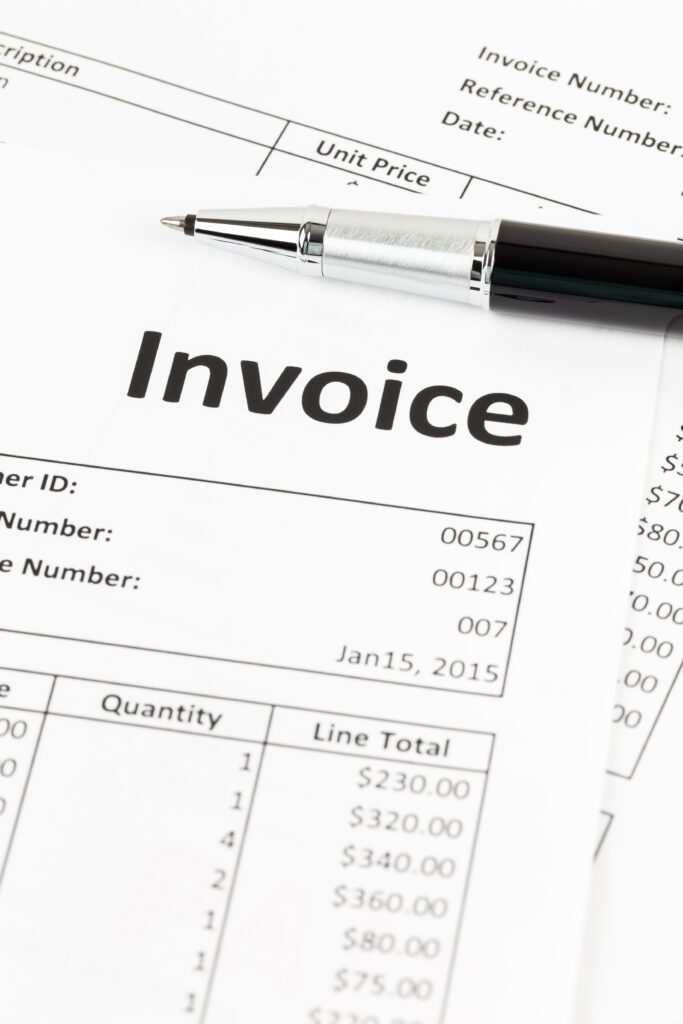
Accounts Receivable financing addresses a specific and common problem in B2B commerce. When a business delivers goods or services and invoices its clients, it has earned revenue that hasn’t arrived yet. Net-30, net-60, and net-90 payment terms are standard practice in many industries, and that gap between earning and collecting is where cash flow problems develop.
AR financing is a revolving credit line secured by outstanding invoices. Rather than waiting for clients to pay on their own schedule, the business draws against a credit line backed by those receivables and repays as invoices clear. The lender holds the receivables as collateral, not as purchased assets, which means the business retains ownership of its invoices and continues managing its own collections. Clients are never notified of the arrangement.
This structure makes AR financing particularly well-suited to manufacturers, distributors, staffing companies, healthcare businesses, and other B2B operations with consistent invoicing patterns. The credit line scales naturally with revenue, which means growing businesses gain access to more working capital as their invoice volume increases.
Best for: Established B2B businesses with creditworthy commercial clients and consistent invoicing, particularly in industries with extended payment terms.
Equipment Financing
Equipment financing allows a business to purchase or lease machinery, vehicles, technology, or other physical assets while spreading the cost over time. The equipment itself typically serves as collateral, which simplifies underwriting compared to unsecured business loans.

Equipment loans can be structured as purchases with a defined payoff period, at the end of which the business owns the asset outright. Leases allow the business to use the equipment for a set term with structured payments, often with an option to purchase at the end. Leasing tends to offer lower upfront costs and can provide tax advantages, since lease payments are often fully deductible as a business expense.
Best for: Businesses that need to acquire or upgrade physical assets without depleting their cash reserves.
Business Credit Cards
Business credit cards are one of the most widely used financing tools among small businesses. SBA Office of Advocacy data shows that 34 percent of small businesses use credit cards as a financing source. Cards provide revolving access to capital with no formal application required beyond initial issuance, and many carry rewards programs that generate value on routine business purchases.
Credit cards work well for short-term purchases that will be repaid quickly, since carrying a balance generates interest charges that can accumulate rapidly. For larger or longer-term capital needs, a credit card is almost always the wrong tool, but for day-to-day operational flexibility, they remain a practical and widely accessible option.
Best for: Covering small, recurring business expenses and short-term cash timing gaps where balances will be paid monthly.
SBA Microloans
The SBA’s Microloan program provides loans up to $50,000 through nonprofit intermediary lenders. It is designed specifically for startup and early-stage businesses, businesses in underserved communities, and entrepreneurs who need relatively small amounts of capital to get started or grow. The average SBA microloan is around $14,000.
Unlike most SBA programs, microloans often come with technical assistance and business counseling as part of the arrangement, which can be as valuable as the capital itself for newer business owners building their financial foundation.
Best for: Early-stage businesses and entrepreneurs who need small amounts of capital and may not yet have the financial history to qualify for larger programs.
Angel Investors

Angel investors are individuals, typically high-net-worth entrepreneurs or executives, who invest their own capital in early-stage companies in exchange for equity. According to SBA Finance FAQ data, angel investments in 2023 totaled $18.6 billion, with the bulk focused on early-stage businesses. Individual angel deals typically range from $250,000 to $500,000, though syndicated groups of angels often invest larger amounts collectively.
Beyond the capital itself, angel investors frequently bring industry experience, networks, and mentorship to their portfolio companies. The tradeoff is equity dilution, since the investor receives ownership in exchange for funding, along with varying degrees of involvement in business decisions depending on the agreement.
Best for: High-growth potential startups in the early stages that need more than friends-and-family acquisition or IPO.
Crowdfunding
Crowdfunding takes several forms, and they operate quite differently from one another.
Rewards-based crowdfunding, through platforms like Kickstarter and Indiegogo, allows businesses to pre-sell products or offer perks in exchange for early backers’ contributions. This approach raises capital without giving up equity and simultaneously validates market demand, but it works primarily for consumer products with broad appeal and requires significant marketing effort to succeed.
Equity crowdfunding, regulated under Regulation Crowdfunding (Reg CF), allows businesses to sell small ownership stakes to a large number of investors through registered online platforms. Kingscrowd data reveals that companies raised $343.6 million through Reg CF in 2024. This approach democratizes access to early-stage capital but comes with regulatory compliance requirements and the complexity of managing a large number of small investors.
Best for: Consumer-facing businesses with compelling products for rewards crowdfunding, or early-stage growth companies comfortable with the regulatory and investor-relations demands of equity crowdfunding.
Grants
Business grants are non-dilutive, non-repayable funding from government agencies, foundations, or corporations. Federal grant programs through agencies like the Small Business Administration, the Department of Commerce, and others provide targeted funding for research, innovation, export development, and businesses in underserved communities. State and local programs add another layer of opportunity.
Grants are competitive and typically require significant application effort, detailed reporting, and compliance with specific use requirements. Many are targeted toward specific industries, business types, demographics, or geographies.
Best for: Businesses that meet specific eligibility criteria and are willing to invest time in the application process for non-repayable funding.
Choosing the Right Option
Most businesses use more than one type of funding across their lifecycle. A startup might begin with personal savings, move to an SBA microloan, add a business line of credit as revenue grows, and eventually access AR financing or equipment loans to support expansion. The options aren’t mutually exclusive, and the right mix depends on what the capital is for, when it’s needed, and what the business can realistically qualify for.
The most important first step is understanding the full landscape. Too many business owners apply for the first product they find rather than the one that fits their situation. That mismatch, the wrong type of capital at the wrong cost for the wrong purpose, is where a lot of the frustration with business funding comes from. The options described above cover the full range of what’s available in the U.S. today. The next step is matching them to your business.
Latest Blogs
-
Can I Get Alternative Business Funding With Bad Credit?
A low credit score closes some doors. It does not close all of them. If you’ve been turned down for a business loan because of your credit score, you’re not alone, and you’re not out of options. According to the Federal Reserve’s 2024 Small Business Credit Survey, 29 percent of business loan applicants were denied…
-
Industry Spotlight: Alternative Financing for Telecommunications Contractors
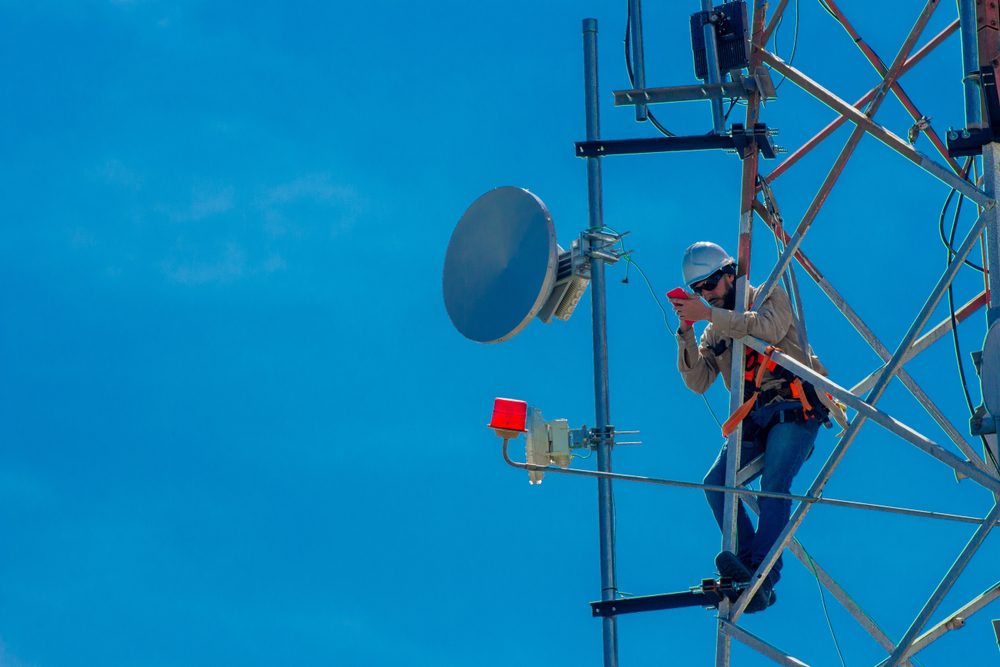
Telecommunications contractors build and maintain the infrastructure that carries voice, data, and broadband across commercial buildings, residential developments, and public networks. Tower erection, fiber optic installation, underground conduit work, distributed antenna systems, and last-mile broadband deployment all move through contractors who mobilize crews, procure materials, and begin work weeks or months before the billing cycle…
-

Industry Spotlight: Alternative Financing for Truck and Auto Parts Distributors
Truck and auto parts distributors supply the components that keep commercial fleets, repair shops, dealerships, and municipal vehicle operations on the road. OEM and aftermarket parts move from manufacturers through distributors to fleet operators, trucking companies, commercial repair facilities, and government vehicle maintenance operations, and those buyers expect fast delivery and reliable inventory availability. The…
-
Industry Spotlight: Alternative Financing for Electrical Equipment Distributors
Electrical equipment distributors supply the components that keep construction projects moving and industrial facilities running. Switchgear, transformers, breakers, panels, wiring, conduit, motors, and lighting products move from manufacturers through distributors to electrical contractors, construction companies, industrial plants, utilities, and municipalities. The distributor sits in the middle of that supply chain, purchasing inventory from manufacturers on…