
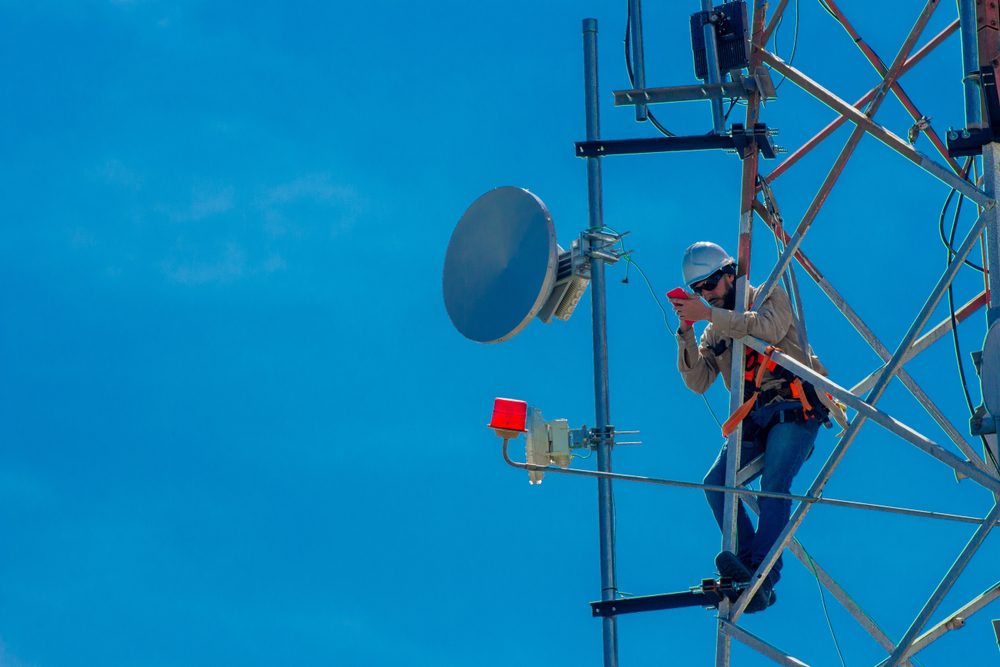
Industry Spotlight: Alternative Financing for Telecommunications Contractors
Telecommunications contractors build and maintain the infrastructure that carries voice, data, and broadband across commercial buildings, residential developments, and public networks. Tower erection, fiber optic installation, underground conduit work, distributed antenna systems, and last-mile broadband deployment all move through contractors who mobilize crews, procure materials, and begin work weeks or months before the billing cycle pays out.
The companies commissioning that work, including wireless carriers, broadband providers, municipalities, and large commercial real estate developers, pay on net-30 to net-60 terms as a matter of standard practice. The contractor is left carrying labor costs, equipment costs, and material costs while those invoices work through the client’s accounts payable process.

Invoice Factoring for Telecom Contractors
Invoice factoring converts outstanding project invoices into immediate working capital. A telecom contractor that has completed a phase of fiber installation, submitted the invoice to the carrier or municipality, and is waiting on payment can receive an advance from a factoring company within days of submission. The factoring company collects from the account debtor when payment comes due and returns the remaining balance minus its fee.
The account debtors in telecommunications contracting are creditworthy. National wireless carriers, regional broadband providers, and municipalities processing infrastructure invoices are established organizations with payment histories that a factoring company can evaluate with confidence. A contractor whose client base includes those kinds of accounts can access factoring on the strength of that receivable base rather than on its own balance sheet position.
For contractors running high invoice volume across multiple active jobs, factoring provides a cash conversion cycle that funds crew deployment and materials procurement on a timeline tied to project completion rather than payment receipt.
AR Financing and the Project Pipeline

AR financing gives telecom contractors an alternative path to working capital that keeps the receivable on the contractor’s books. The contractor advances against outstanding invoices, receives the capital needed to fund active projects or mobilize new ones, and repays when the client pays. For contractors with established carrier or municipal relationships and predictable monthly billing volume, AR financing provides a facility that scales with the project pipeline without requiring a formal credit review each time a new contract is awarded.
The application to project management is direct. A contractor that needs to place a materials order or extend crew capacity before a prior phase has been paid can advance against outstanding invoices to fund that step rather than deferring project activity or drawing down cash reserves. Keeping the project on schedule protects the contractor’s relationship with the account and positions the business to pursue the next contract in that client’s buildout program.
Equipment Financing for Field Operations
Telecommunications contractors operate equipment that ranges from trenching machines and directional boring equipment to bucket trucks, cable pullers, and specialized fiber splicing tools. That equipment depreciates in a field environment and requires periodic replacement or expansion when project volume grows.
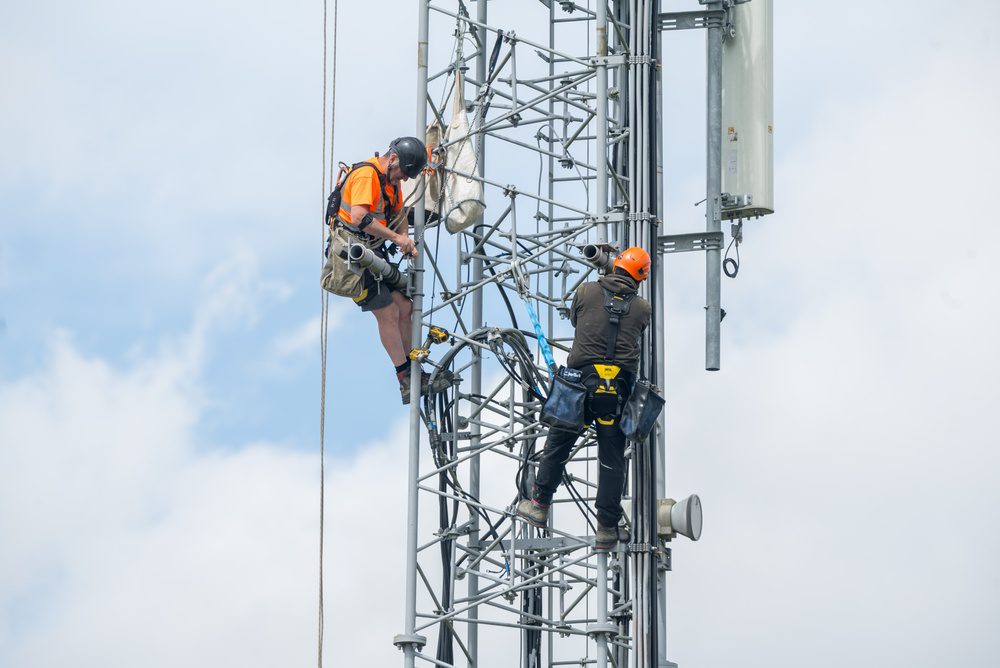
Equipment financing spreads acquisition costs over time rather than concentrating them in a single capital outlay. For a contractor adding capacity to pursue a new tower contract or a fiber deployment in a new service territory, equipment financing provides a path to that investment without pulling capital away from the materials and labor budgets that keep active projects moving. Sale-leaseback arrangements on owned equipment can also convert existing fleet equity into working capital when a project opportunity requires immediate cash.
Capital That Moves With the Work
A telecommunications contractor that cannot fund crew deployment on a new project because payment on a prior one hasn’t cleared is a contractor that passes on revenue it has already positioned itself to earn. Factoring and AR financing give telecom contractors a way to keep the project pipeline moving without depending on payment timing to determine when the next mobilization can happen.
CapitalNetwork works with construction and infrastructure contractors to identify the financing structure that fits the project cycle, the account mix, and the billing volume of the operation. If project growth is outrunning the cash available to execute it, contact us.
Latest Blogs
-

Can I Get Alternative Business Funding With Bad Credit?
A low credit score closes some doors. It does not close all of them. If you’ve been turned down for a business loan because of your credit score, you’re not alone, and you’re not out of options. According to the Federal Reserve’s 2024 Small Business Credit Survey, 29 percent of business loan applicants were denied…
-
Industry Spotlight: Alternative Financing for Telecommunications Contractors
Telecommunications contractors build and maintain the infrastructure that carries voice, data, and broadband across commercial buildings, residential developments, and public networks. Tower erection, fiber optic installation, underground conduit work, distributed antenna systems, and last-mile broadband deployment all move through contractors who mobilize crews, procure materials, and begin work weeks or months before the billing cycle…
-

Industry Spotlight: Alternative Financing for Truck and Auto Parts Distributors
Truck and auto parts distributors supply the components that keep commercial fleets, repair shops, dealerships, and municipal vehicle operations on the road. OEM and aftermarket parts move from manufacturers through distributors to fleet operators, trucking companies, commercial repair facilities, and government vehicle maintenance operations, and those buyers expect fast delivery and reliable inventory availability. The…
-
Industry Spotlight: Alternative Financing for Electrical Equipment Distributors
Electrical equipment distributors supply the components that keep construction projects moving and industrial facilities running. Switchgear, transformers, breakers, panels, wiring, conduit, motors, and lighting products move from manufacturers through distributors to electrical contractors, construction companies, industrial plants, utilities, and municipalities. The distributor sits in the middle of that supply chain, purchasing inventory from manufacturers on…